Lyme disease
Lyme disease is a natural focal disease caused by Borrelia burgdorferi (Lyme spirochete) and is primarily transmitted through the bite of hard ticks. The spirochete develops in the tick midgut and is transmitted to the host via regurgitated gut contents, saliva, or feces of infected ticks. It is widely distributed in nature, particularly in forested and grassland environments. Infection can lead to multisystem and multiorgan damage in animals and humans, and in severe cases may result in disability or death.
Pathogen Classification and Characteristics:
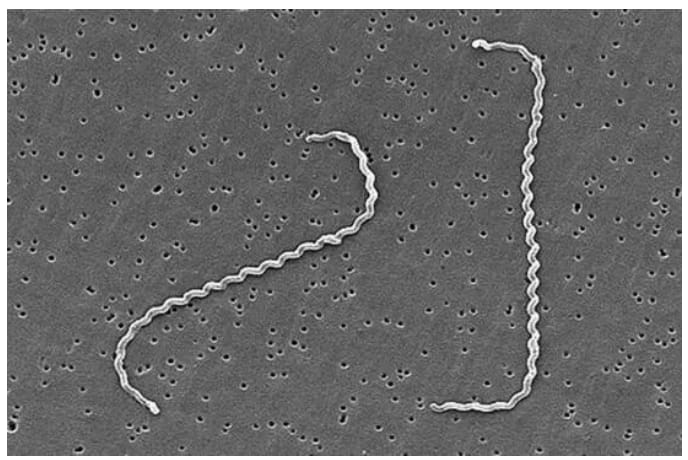
Borrelia burgdorferi is a prokaryotic, Gram-negative spirochete belonging to the phylum Spirochaetota, family Spirochaetaceae, genus Borrelia. It is a unicellular, loosely coiled, left-handed spiral bacterium measuring approximately 10–20 μm in length and 0.18–0.25 μm in width. Periplasmic (axial) flagella are present at both ends. It is commonly visualized by silver staining, as well as Wright or Giemsa staining.
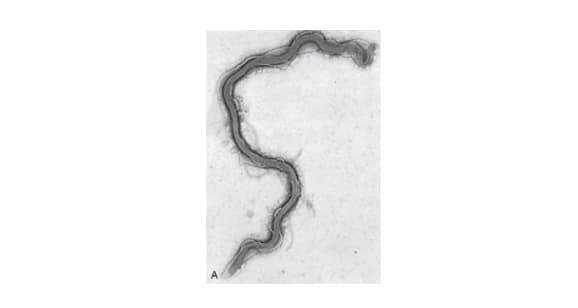
Borrelia burgdorferi is a microaerophilic bacterium that grows well at 30–34 °C in media containing yeast, mineral salts, and reducing agents, such as BSK-H liquid medium. It can also grow in the chorioallantoic membrane of chicken embryos, although in vitro cultivation is relatively difficult. The organism shows higher resistance under moist and low-temperature conditions but is sensitive to heat, desiccation, and common disinfectants.
Epidemiology:
Lyme disease is widely distributed across all five continents, with the highest incidence in the United States and Europe. In China, it is prevalent in northern provinces, with an average infection rate of 5.06%. The disease occurs most frequently from May to September, coinciding with peak activity of hard ticks and the tourist season, and therefore requires heightened attention. Susceptible populations include pets and humans with frequent outdoor exposure, stray animals, wildlife, farmers, and forestry workers.
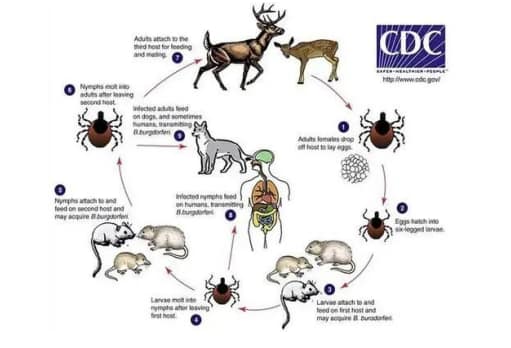
Spirochetes cannot survive as free-living organisms in the environment. They are host-associated and are transmitted between vertebrate reservoir hosts (mammals, birds, and lizards) and hematophagous arthropod vectors, with hard ticks being the most important source of infection. In China, Ixodes persulcatus is the primary vector of Lyme disease, while Ixodes granulatus and Haemaphysalis longicornis predominate in northern regions.
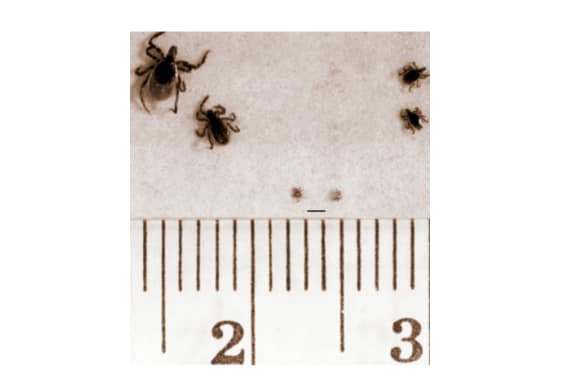
The tick life cycle consists of four stages: egg, larva, nymph, and adult. Larvae typically hatch in spring, feed once in summer, overwinter, and molt into nymphs, which have a higher transmission capacity. After feeding, adult ticks detach from the host and return to the environment to lay eggs. Ticks usually oviposit in dark, humid sites such as corners, under beds or sofas, and in cracks of wooden floors; grasslands, shrubs, and forests are also ideal breeding habitats.
Ticks are ambush predators, and pets may become infected when dogs are walked outdoors or cats rest on the ground. Except for the egg stage, hosts can be infected at all tick life stages. Tick-borne diseases show marked seasonality, with most infections occurring in spring and summer, corresponding to peak activity of larvae and nymphs and increased outdoor activities of humans and pets. In urban settings, parks are also important sites for Lyme disease transmission, where rodents serve as key reservoirs for ticks.
Pathological Mechanism:
Ticks acquire the pathogen by feeding on the blood of infected animals. Borrelia expresses outer surface protein A (OspA), allowing the spirochete to adhere to the tick midgut. During replication, it penetrates the gut epithelium, enters the hemolymph, migrates to the salivary glands, and is transmitted during the next blood meal.
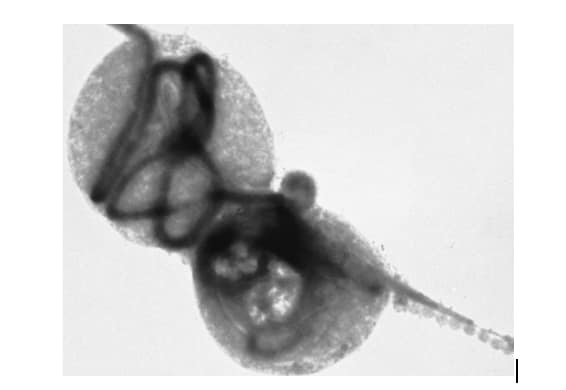
After entering the host, the spirochete load decreases due to immune responses but is not eliminated, making early infection difficult to detect during the first few weeks. Borrelia can evade host immunity by altering its morphology; under adverse conditions, it can transform into a spherical form within minutes. In this state, it can survive for several days without active metabolism or nutrient dependence and revert to the spirochete form when conditions improve, significantly increasing the difficulty of Lyme disease treatment.
Clinical Manifestations:
The clinical manifestations of Lyme disease can be divided into three stages: early localized infection, early disseminated infection, and late persistent infection (or chronic Lyme disease).
Arthritis: Monoarthritis or polyarthritis is the most prominent clinical feature. Inflammation usually first appears in joints closest to the tick bite and presents as joint swelling and lameness, often accompanied by fever. Intermittent lameness may occur, with limping in one limb for 3–4 days before shifting to another limb.
Renal involvement: Immune complex deposition may lead to glomerulonephritis. Prior to renal disease, affected individuals may show anorexia, vomiting, and lethargy. Renal manifestations include tissue edema, hypertension, body cavity effusion, and thromboembolic events.
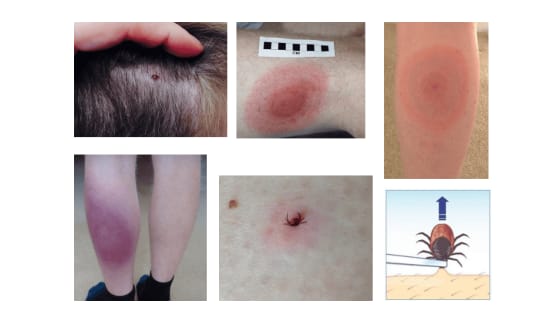
Other symptoms: Neurological and cardiac manifestations are relatively rare. Cutaneous signs usually appear within a few days after the tick bite as erythematous lesions and typically resolve within about one week.
Diagnostic Methods:
The diagnosis of Lyme disease is based primarily on clinical manifestations, epidemiological history, and laboratory findings. Laboratory tests include serological and molecular assays.
CBC and biochemistry: Mainly used to assess renal involvement; findings may include hypoalbuminemia, increased non-protein nitrogen (NPN), hypercholesterolemia, thrombocytopenia, hyperphosphatemia, and hyperkalemia.
Radiography: Primarily used to differentiate lameness caused by trauma or tumors. Affected joints may show periarticular soft tissue opacity and proliferation.
Serum C6 antibody test: Used as a confirmatory diagnostic tool and for treatment monitoring, as C6 antibody levels decrease significantly after antimicrobial therapy.
PCR: Detects Borrelia DNA in blood, cerebrospinal fluid, or synovial fluid and is currently the simplest, fastest, and most accurate diagnostic method.
Treatment Recommendations:
The treatment of Lyme disease primarily involves antibiotic therapy, such as doxycycline, amoxicillin, and cephalosporins. Treatment strategies vary depending on the stage of the disease and the severity of clinical manifestations. Early localized infection can usually be cured with oral antibiotics, whereas late persistent infection may require prolonged therapy and, in some cases, intravenous antibiotic administration.
In most cases, symptoms improve rapidly after antibiotic therapy; however, complete recovery usually requires several weeks of continued treatment. In severe cases, timely blood transfusion may be necessary due to markedly reduced blood cell counts.
It should be noted that, in addition to doxycycline, amoxicillin, and cephalosporins, broad-spectrum antibiotics such as tetracycline, chloramphenicol, and chlortetracycline can also inhibit bacterial proliferation. In contrast, penicillin is ineffective, and sulfonamides may even promote the growth of certain strains.
Preventive Measures:
Lyme disease is a zoonotic disease transmitted by tick bites. The following measures can help prevent Lyme disease in pets:
1.Regular tick inspection and removal:
Groom pets frequently, especially cats, to promptly detect and remove attached ticks.
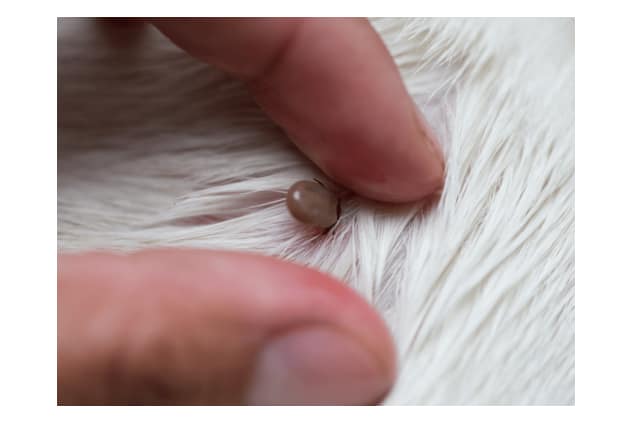
If a tick is found, wear gloves and grasp it firmly close to the head, pulling it straight out to avoid leaving mouthparts in the skin.
Place removed ticks in alcohol to kill them; do not crush them by hand to prevent infection.
2.Use of tick-prevention products:
Use tick repellents, sprays, or collars suitable for pets under veterinary guidance.
Avoid using products not recommended by a veterinarian to prevent potential harm.
3.Reduce exposure to ticks:
During peak tick seasons, limit pets’ access to tick-prone areas such as grasslands and forests.
When outdoor activity is necessary, consider tick-protective clothing or footwear designed for pets.
4.Maintain a clean living environment:
Regularly clean pet living areas and keep them dry and well ventilated.
Prevent pets from contacting potential tick carriers, such as wild animals or contaminated clothing.
5.Seek prompt veterinary care:
If pets show symptoms of Lyme disease, such as fever, joint swelling, or loss of appetite, seek veterinary care immediately.
Veterinarians will develop an appropriate treatment plan based on clinical signs and test results.
If a pet is diagnosed with Lyme disease, owners are advised to seek medical evaluation at a nearby healthcare facility.