
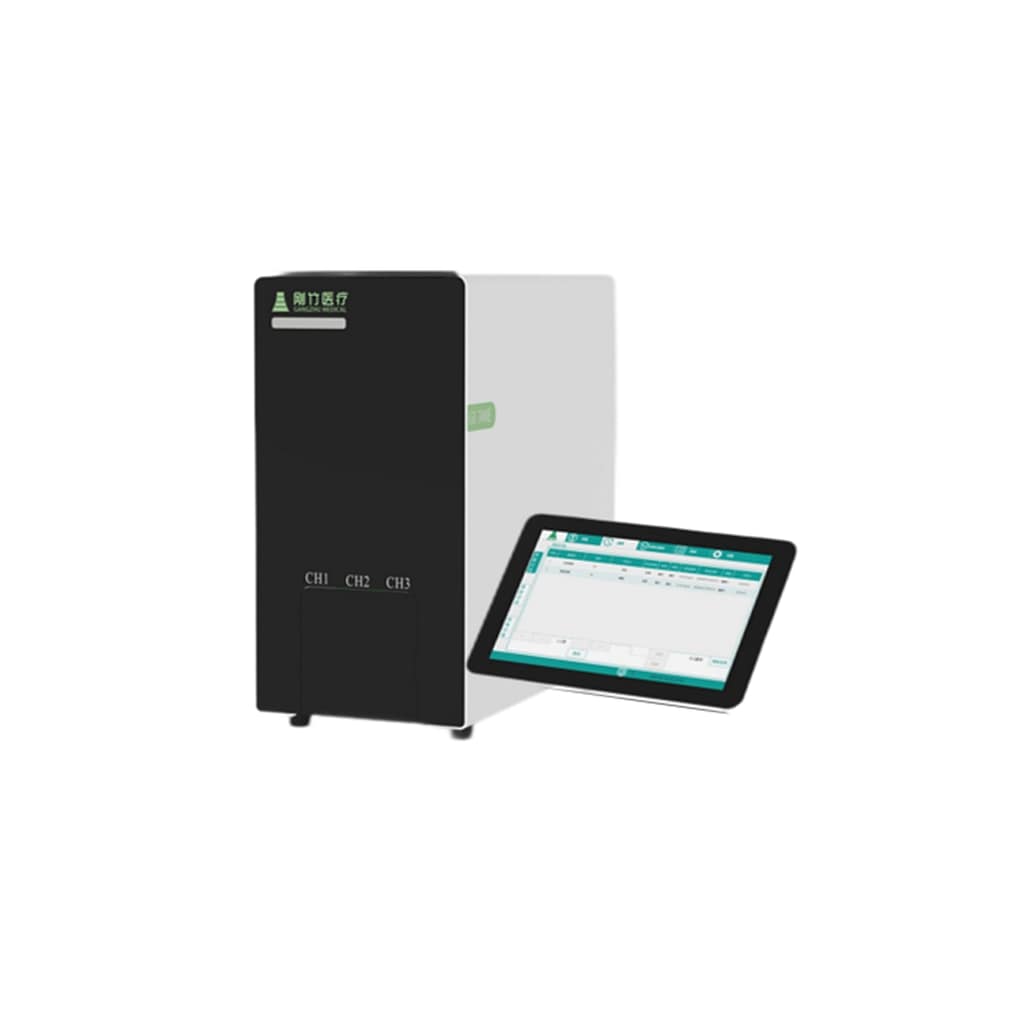
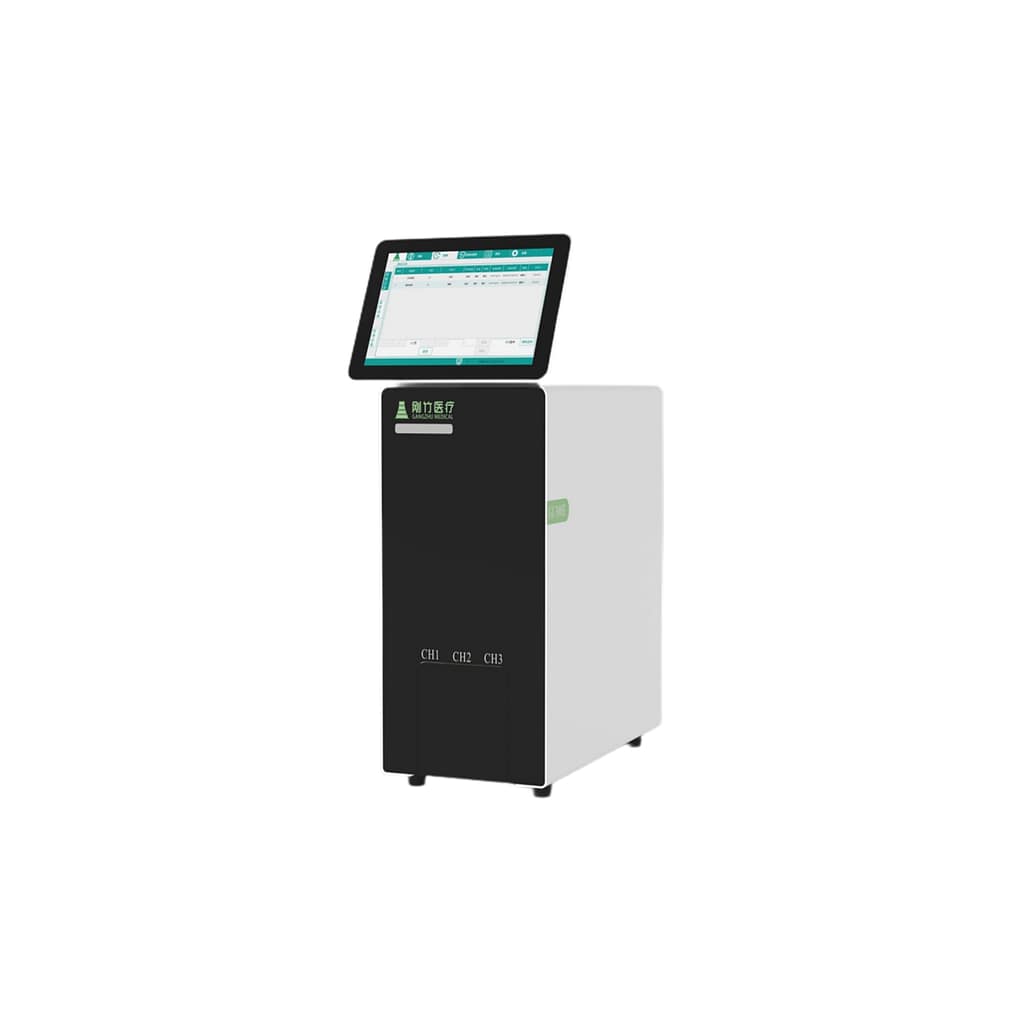
GI-300E Chemiluminescence Immunoassay Analyzer
GI-300E adopts cutting-edge chemiluminescence technology to provide professional quantitative immunodiagnostic solutions for veterinary hospitals, making it a preferred high-precision diagnostic instrument in the veterinary medical industry.
Chemiluminescence Immunoassay (CLIA) is a technology that combines chemiluminescence with immunoreactions. Through the specific binding of antigens and antibodies, it quantitatively detects target analytes (antigens or antibodies) by measuring the intensity of chemiluminescent signals. Its core principle can be summarized as a synergistic process of immunorecognition, signal amplification, and luminescence detection.
We can offer the OEM/ODM services of our products. The product can be customized according to your personalized requirements, including the brand, label, painting colors, and packing box. Please offer your design documents or tell us your ideas and our R&D team will do the rest.
| Product name | Chemiluminescence Immunoassay Analyzer | Model | GI-300E/GI-600E |
| Dimensions | 407*222*427mm | Rated Voltage | 24AD/DC Power Adapter |
| Weight | 15kg | Operation Language | English, Spanish, Others |
| Equipment channels | 3/6 Channels | Equipment Speed | 12min/T |
| Applicable Samples | Serum,Plasma, Whole Blood | Equipment Control | 10.1-inch Ultra-high DefinitionTouch Screen |
| Information Entry | Built-in barcode scanning module, supportexternal barcode scanner input | Equipment Stability | CV≤5% |
Endocrinology: Evaluation of thyroid function and adrenal function
Cardiology: Markers for myocardial injury and heart failure
Oncology: Auxiliary diagnosis and monitoring of tumor markers
Inflammation & Pancreatitis: Specific indicators such as CRP, fPL/CPL
Reproduction & Nephrology: Progesterone monitoring, early renal function indicators
Thromboembolism: Canine & feline D dimer
GI-300E adopts enzymatic chemiluminescence immunoassay technology. Through a 5-step workflow of Immunocapture → Sandwich Complex Formation → Magnetic Washing Purification → Enzymatic Luminescence → PMT Signal Acquisition, it achieves highly specific and highly sensitive quantitative detection.
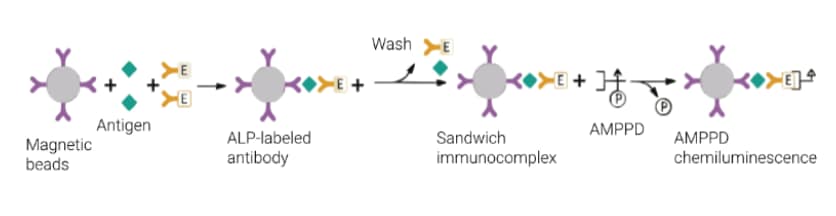
① Immunoassay Binding:
Specific antibodies capture target antigens in the sample.
② Sandwich Complex Formation:
Forms a “capture antibody-antigen-detection antibody” sandwich complex.
③ Magnetic Separation & Washing:
Removes unbound substances to eliminate interference.
④ Enzymatic Chemiluminescence:
Alkaline Phosphatase (ALP) catalyzes the AMPPD substrate to produce light signals.
⑤ Signal Acquisition:
A Photomultiplier Tube (PMT) captures photon signals for quantitative analysis.
| Comparison Dimensions | Photodiode (PD) | Photomultiplier Tube (PMT) |
| Working Mechanism | Passive photoelectric conversion, no signal amplification | Active electron avalanche multiplication, million-fold gain |
| Sensitivity | Low, only responds to strong ligh | Extremely high, capable of single-photon detection |
| Anti-interference Capability | Poor, full-blind reception, easily interfered by stray light / autofluorescence | Excellent, captures only specific luminescence under full-dark background |
| Applicable Technologies | Immunofluorescence Assay (IFA), Fluorescence Immunoassay | Chemiluminescence Immunoassay (CLIA), Ultra-trace Luminescence Detection |
| Signal Characteristics | Relies on external excitation light; signal prone to attenuation | No excitation light required; signal stable and measurable after amplification |
| False Positive Risk | High; stray light easily misjudged as valid signal | Extremely low; interference fundamentally eliminated at the source |
| Methodologies | Sensitivity | Linear Range | |
| Chemiluminescence | Combines magnetic separation, CL, and immunoassay. Self-luminescent, no external excitation→ ultra-low background noise. | 10⁻¹⁹–10⁻²¹ mol/L | 4–6 orders of magnitude (no dilution needed) |
| Fluorescence | Uses fluorescein labels with external excitation → prone to background fluorescence and non-specific interference. | Up to 10⁻¹² mol/L | 1–2 orders of magnitude |
| Key Advantages of CL | Gold standard in clinical immunoassays; better anti-interference and stability. | Far higher sensitivity for trace quantification. | Wider range for more reliable results. |